
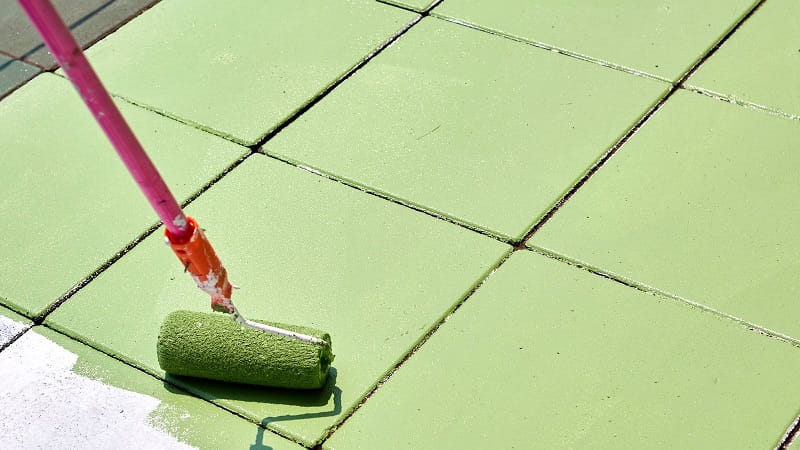
Can you paint patio slabs? Yes, sound concrete slabs can be painted with a suitable exterior floor coating. Clean and prepare them first, and fix any loose slabs or drainage problems before painting. For stone or porcelain, confirm the coating is compatible before applying it.
Which Patio Slabs Can Be Painted?
The term patio slabs covers several materials. A coating that works on concrete should not automatically be used on stone or outdoor tiles.
| Patio surface | Is painting worth considering? | What to check first |
|---|---|---|
| Bare concrete slabs or pavers | Often, with a compatible exterior floor coating | Surface strength, moisture, contamination and preparation requirements |
| Previously painted concrete | Potentially | Adhesion of the existing paint and compatibility with the new coating |
| Sealed concrete paving | Only with an approved preparation and coating system | Type and condition of the existing sealer |
| Natural stone | Requires material-specific advice | Stone type, porosity, existing treatments and whether changing its appearance is desirable |
| Porcelain or glazed outdoor tiles | Do not assume concrete paving paint is suitable | Explicit manufacturer approval for the tile surface and exterior foot traffic |
Natural stone deserves particular care. Painting covers its colour variation and texture, and removing the coating later may be difficult. If the stone is simply dirty, cleaning a small test area first can help you decide whether a colour change is necessary. Porcelain presents a different issue: its dense surface requires a coating system specifically suited to it. An interior tile paint or general concrete paint should not be treated as an interchangeable option.
When Is Painting a Patio a Bad Idea?
Inspect the patio after rain and again when it has dried. This makes drainage problems and persistently damp patches easier to spot.
Postpone painting if you find:
- Rocking or sunken slabs: the bedding or supporting base needs attention.
- Standing water: a coating will not correct the falls or blocked drainage.
- Flaking or powdery concrete: paint needs a sound surface to bond to.
- Recurring cracks: establish whether movement is continuing before making cosmetic repairs.
- Peeling existing paint: the new finish will depend on the strength of the layer underneath.
- Unexplained dampness or recurring white deposits: investigate the moisture source before coating.
Also check whether painting is needed at all. Dark spots, algae and ingrained dirt can make paving look permanently discoloured. Cleaning may reveal a surface you are happy to keep. For a patio with widespread movement or drainage faults, spend the budget on correcting those problems first. Covering them makes inspection harder without resolving the cause.
What Paint Should You Use on Patio Slabs?
Choose a coating that specifically lists your paving material, exterior exposure and pedestrian traffic among its intended uses. “Suitable for exterior masonry” alone does not establish that a wall paint can withstand shoes, chair legs and regular washing. Read the product data sheet before buying the topcoat. Check the approved cleaner, surface preparation, primer requirements, coverage, recoating interval and time before use. Australian manufacturers offer dedicated concrete and paving systems with different preparation products and finishes.
Wet-weather grip also matters. A coating can change the texture of the existing paving. Where the system requires a compatible slip-resistant additive, follow its specified mixing and application instructions rather than adding household sand. Some coating systems also have restrictions for steep surfaces. Before committing to a colour, apply a sample to an inconspicuous area. View it in daylight and shade, and assess the cured finish. A small colour card cannot show how the coating will look across textured or previously patched paving.
How to Paint Patio Slabs: Preparation and Application
The following sequence is a planning guide for suitable concrete paving. The selected coating’s instructions determine the actual preparation method, number of coats and drying times.
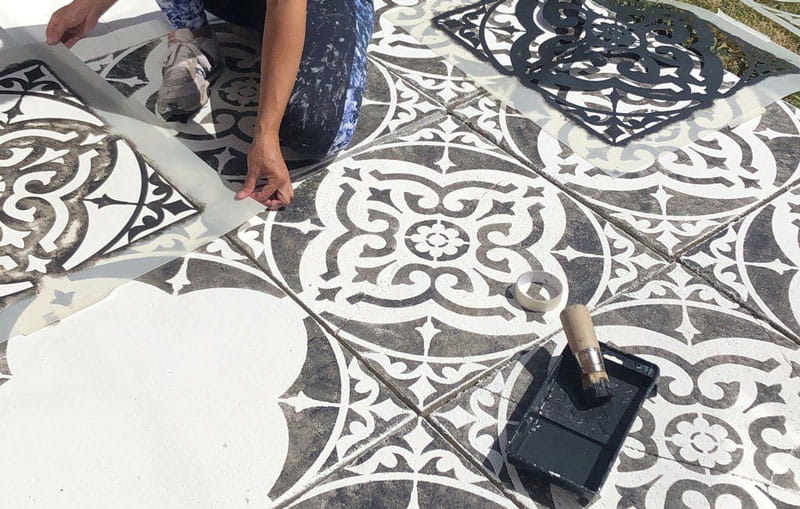
1. Clean the Slabs and Check Existing Coatings
Remove furniture, sweep away loose debris and protect adjacent surfaces and plants. Use a cleaner suitable for both the paving and the coating system, paying attention to grease, organic growth and cleaning residues. If pressure washing is appropriate, avoid damaging the surface or washing material out of the joints. Allow the paving to dry to the coating manufacturer’s requirements; a surface that looks dry can still contain moisture.
Check old paint for weak adhesion. Painting over a firmly attached coating may be possible with an approved system, while loose or poorly bonded paint needs removal. If an old coating is unidentified, establish an appropriate removal method before sanding or grinding it.
2. Prepare the Surface and Test a Small Area
Repair suitable minor defects with a compatible repair material and allow it to cure. Moving slabs or active cracks need a different repair approach from small, stable surface imperfections.
Then follow the specified preparation process:
- Remove or prepare existing sealers as directed.
- Create the required surface profile using the approved method.
- Remove preparation dust and residues.
- Apply primer if the system requires it.
- Test the complete coating system on a small area.
Do not automatically acid-etch every patio. The correct method depends on the material and coating, and a treatment intended for bare concrete may damage other surfaces. Keep movement joints functional. Painting should not involve filling flexible joints with rigid repair material or bridging them against the coating manufacturer’s advice.
3. Apply the Coating and Allow It to Cure
Choose a weather window that meets the product’s requirements throughout application and drying. For Melbourne projects, check overnight conditions as well as the daytime forecast. Work towards an exit, cut in around edges and apply the coating at the stated coverage rate. Thick coats are not a shortcut to durability. Follow the specified recoating interval and any instructions for incorporating a slip-resistant additive.
Keep foot traffic, pets and furniture off the surface until permitted. Touch-dry, ready to recoat and ready for normal use are different stages. Allow extra time where the manufacturer requires it for cool or humid conditions. For broader advice on planning an outdoor surface, our outdoor tiling tips cover considerations for patio and other exterior tiling projects.
How Long Does Patio Paint Last, and Why Does It Peel?
There is no reliable lifespan that applies to every painted patio. Coating type, preparation, moisture exposure, sunlight, traffic and furniture movement all affect performance. An uncovered dining area with frequently moved chairs will face different wear from a sheltered, lightly used patio. Expect to inspect the finish and carry out maintenance rather than treating painting as a permanent change. When a coating fails, look for the cause before applying another layer.
| What you notice | Possible cause | What to do next |
|---|---|---|
| Paint lifts in sheets | Poor adhesion, contamination or an incompatible underlying coating | Assess and remove weak layers; review the preparation system |
| Blisters or bubbles | Moisture or application conditions outside the product’s limits | Investigate moisture and check application requirements |
| Wear around furniture | Repeated abrasion or use before sufficient curing | Protect contact points and repair using the approved method |
| Cracks returning through paint | Continued movement or an unresolved defect | Assess the slab or base rather than repeatedly repainting |
| Uneven colour or sheen | Variable absorption, inconsistent application or drying conditions | Check preparation, coverage and recoating instructions |
For ongoing care, remove abrasive grit, clean spills promptly and use furniture feet suitable for the coating. Avoid aggressive cleaning methods unless the coating manufacturer permits them.
Painting vs Staining, Sealing or Replacing Patio Slabs
The right option depends on what you want to change. A patio that needs cleaning does not have the same problem as one with failing paving. Cleaning is the first option when dirt or biological growth is hiding an otherwise acceptable surface. Painting or an opaque coloured coating can suit sound, compatible paving when you want a more uniform colour and accept future coating maintenance. A compatible paving stain may suit some concrete surfaces where a colour change is wanted without the same appearance as an opaque paint. Check the product carefully: stains differ in penetration, opacity and preparation requirements. Manufacturer guidance for paving stains also limits their use to specified substrates.
A clear sealer may help protect or enhance a suitable surface, but it will not reliably conceal repairs or mismatched slabs. Its effect on colour, sheen and wet grip needs checking. Repairing, relaying or replacing the paving becomes more relevant when the problem involves movement, deterioration, drainage or a layout you want to change. Compare the complete cost rather than the paint tin alone. Preparation products, coating removal, repairs, tools and time out of use can substantially change the budget. Obtain a separate repair or replacement quote where the patio has underlying faults.
If you are considering a tiled replacement, UniqueTiling’s tile design and installation service provides a starting point for discussing the new surface and installation requirements.
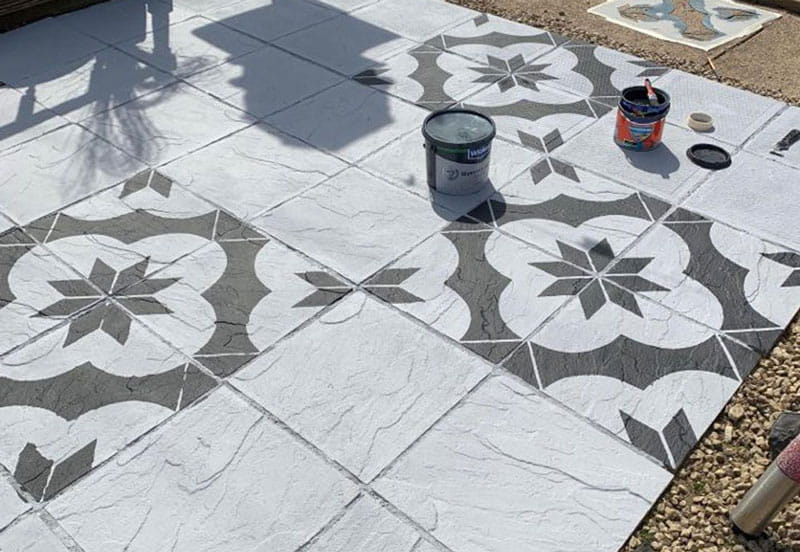
Conclusion
You can paint patio slabs when the material is compatible, the paving is stable and dry enough, and the coating is approved for exterior foot traffic. Sound concrete paving is worth assessing for this approach if your main goal is a colour change. Start with cleaning if staining is the problem. Repair movement, deterioration and drainage faults before considering a finish. For natural stone, porcelain or previously sealed paving, confirm a suitable system before buying paint.
If the patio needs repeated repairs or you want a different material and layout, compare relaying or replacement with the full preparation and maintenance cost of painting. Choose the option that addresses the condition of the patio as well as its appearance.